Sigma SD Quattro H Review
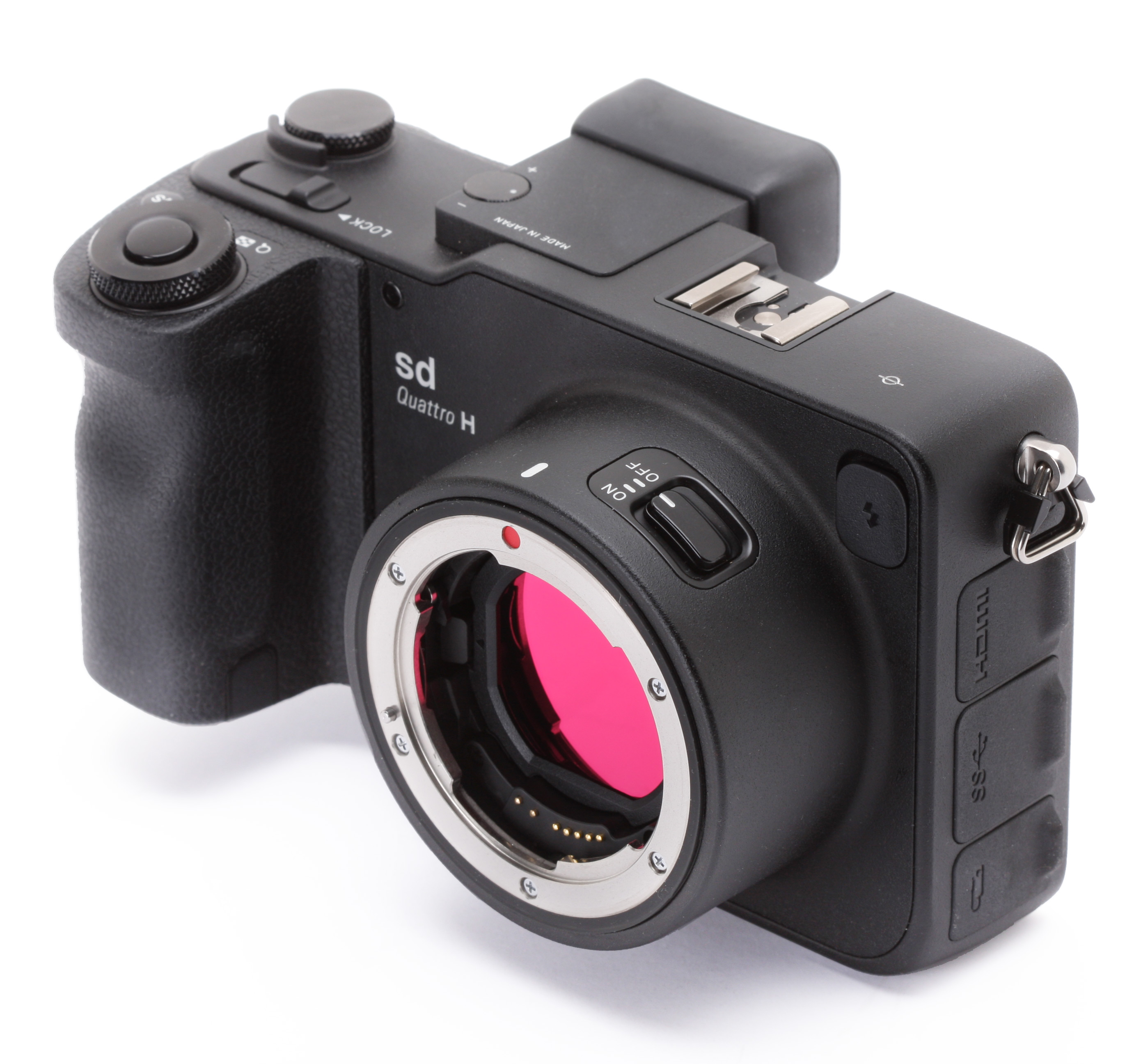 |
The Sigma Quattro H is a mirrorless interchangeable lens camera with an APS-H (1.3x crop) sensor. It has a spatial resolution of 25.5MP but uses a sensor technology very different from other cameras, capturing around 38M pieces of information and capable of producing files with far higher levels of detail than you'd expect from a conventional 25.5MP camera.
Key Features
- 25.5MP Foveon X3 Quattro APS-H sensor
- Hybrid (combined phase + contrast detection) autofocus system
- JPEG, X3F Raw or DNG file output
- 2.36m dot (1024 x 768 pixel) LCD viewfinder
- 1.62m dot (900 x 600 pixel ) LCD rear screen
- Dust and splash-resistant magnesium alloy body
- In-camera Raw conversion (X3F only)
- Multi-shot Super-Fine Detail mode (X3F only)
In keeping with Sigma's history of idiosyncratic innovation, there are two things that set it apart from the majority of mirrorless cameras: the use of a full-depth DSLR mount (the company's own SA mount) and the use of a Foveon X3 Quattro sensor, which captures light and perceives color very differently from other cameras.
Full depth SA mount
This isn't the first time we've seen a camera maker build a camera around a full depth DSLR mount, rather than taking advantage of the lack of mirror to make the camera smaller: Pentax's K-01 took the same approach.
There are two potential disadvantages of this approach. The first is, as you'd expect, the wasted space of building a mirror box for a camera with no mirror. The second, arguably more important downside, is that most DSLR lenses are designed and optimized for phase detection autofocus and they often perform poorly when asked to focus by contrast detection, meaning you have a wide choice of lenses but perpetually hamstrung performance. Sigma has tried to mitigate this by adopting on-sensor phase detection in the SD Quattro H.
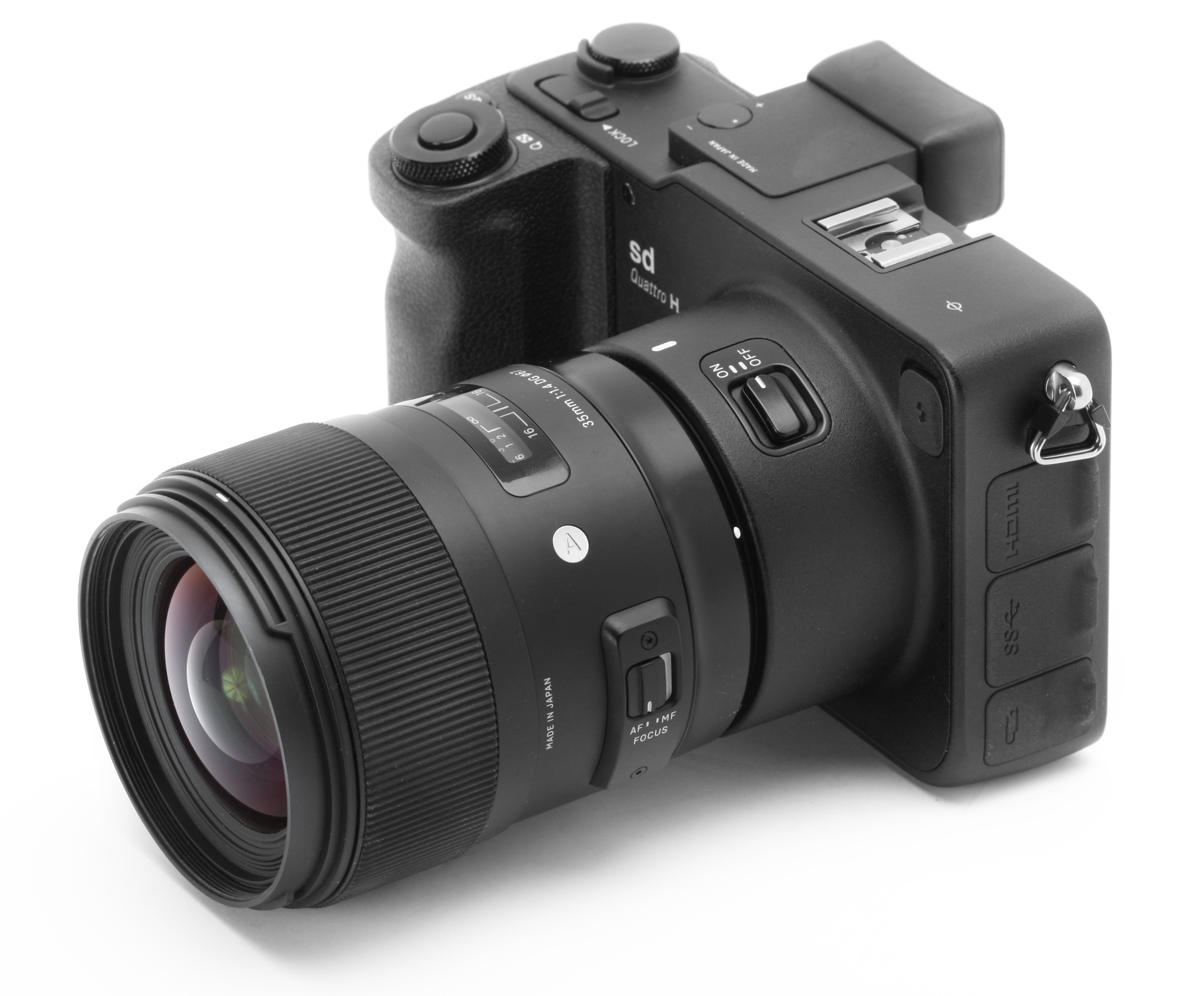 |
| If nothing else, the use of the full-depth SA lens mount means you can use any of Sigma's impressive Art series of lenses. |
The obvious appeal of using an existing mount is that the lenses already exist for it. Sigma produces SA mount versions of 39 of its lenses, which plausibly means the Quattro H has one of the widest choices of own-brand lenses of any mirrorless camera.
Foveon X3 Quattro Sensor
The X3 Quattro sensor is at the heart of what makes the SD Quattro H interesting and is, far more than any physical difference, the thing that most sets this camera apart from all its rivals.
As with all Foveon chips, the sensor interprets color based on the fact that different colors of light have different amounts of energy and so can penetrate the sensor to different depths. This is radically different from conventional designs that place filters in front of the sensor, throwing away around half of all the light so that each pixel only 'sees' light of a predetermined color.
Unlike previous Foveon chips, the Quattro design doesn't attempt to capture full color information at every pixel, instead capturing more spatial resolution than color resolution. This is a fundamentally similar trade-off made by conventional sensors, so it'll be interesting to see whether this latest design can maintain enough of what made Foveon distinctive while trying to offer more competitive results in other respects.
The 'H' in the camera's name refers to the use of an APS-H sensor (26.7 x 17.9mm), which imparts a 1.35x crop, rather than the 1.5x of APS-C and is about 30% larger. The camera will automatically use a cropped region of its sensor if you mount one of Sigma's 'DC' APS-C lenses on it, but this can be switched off if you want to capture the full extent of the lens's image circle.
DNG capability
The other big difference is that the Quattro H can be set to shoot DNG files. These are produced by the camera deconvoluting its sensor's output and writing them as ~150MB files with three 12-bit color channels. This means the files are significantly larger and theoretically less flexible than the camera's native X3F Raw files.
The DNGs can't be used with the camera's in-camera Raw converter and you can't shoot DNG + JPEG, but it hugely expands choice of software for processing the files. For this reason, the rest of the review will primarily be based on the camera's DNG output.
This, and its limited application, is why we won't be testing the X3F-only Super Fine Detail mode, which shoots seven images at different exposures then combines them to create an image with greater dynamic range (both through capturing a broader range of tones and the noise-cancelling effect of image combination).
Comments
Post a Comment